Please login to Online Banking to apply. If you do not have Online Banking, please click here to apply.
Not a member yet?
Listerhill Credit Union is a nonprofit financial cooperative improving lives in our community.
If you live in Alabama, Georgia, Mississippi, Florida, or Tennessee, you are eligible to become a member. Depending on your individual eligibility, we may require membership into an approved association at no cost to you.
You can also qualify for membership by being a family member of a current or potential Listerhill member.
With only $5, you can join Listerhill today and start taking advantage of a lifetime membership.
By clicking "Continue," you will leave Listerhill's website and enter a website hosted by a third party. Please be aware that this external website is not operated by Listerhill Credit Union. We are not responsible for the content, availability or the security of this linked site, and our privacy policies do not apply. We encourage you to review the privacy and security policies of the site you are visiting.
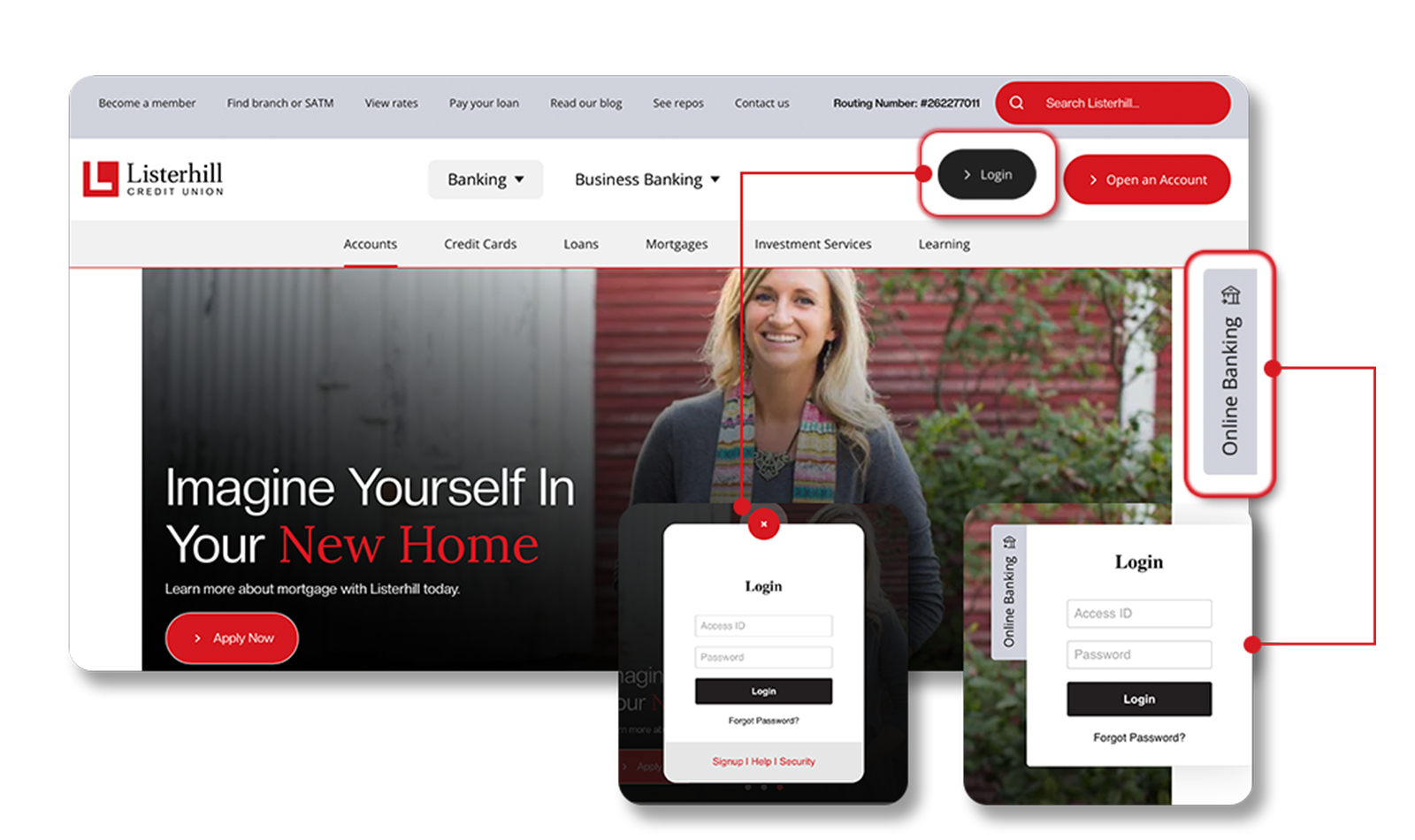
Welcome to Your New Site!
We’ve refreshed our online banking login to make it easier to find — look for it in the sidebar of our new homepage. Don’t worry, your original login option is still there too!
Find Anything, Fast
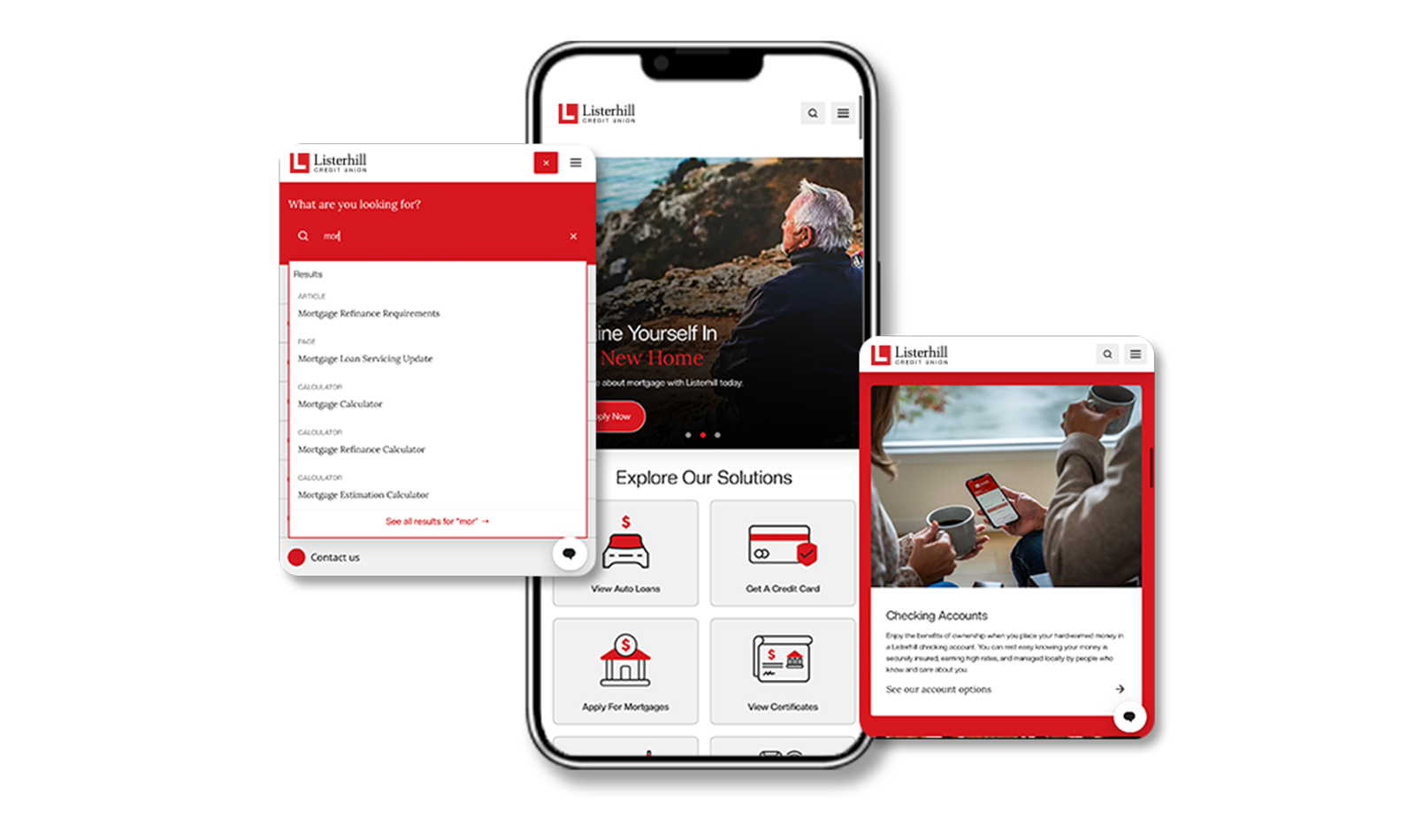
Our new search bar lives right at the top of every page, complete with autocomplete, popular searches, and helpful filters. Finding what you need has never been quicker.
Get There in One Click
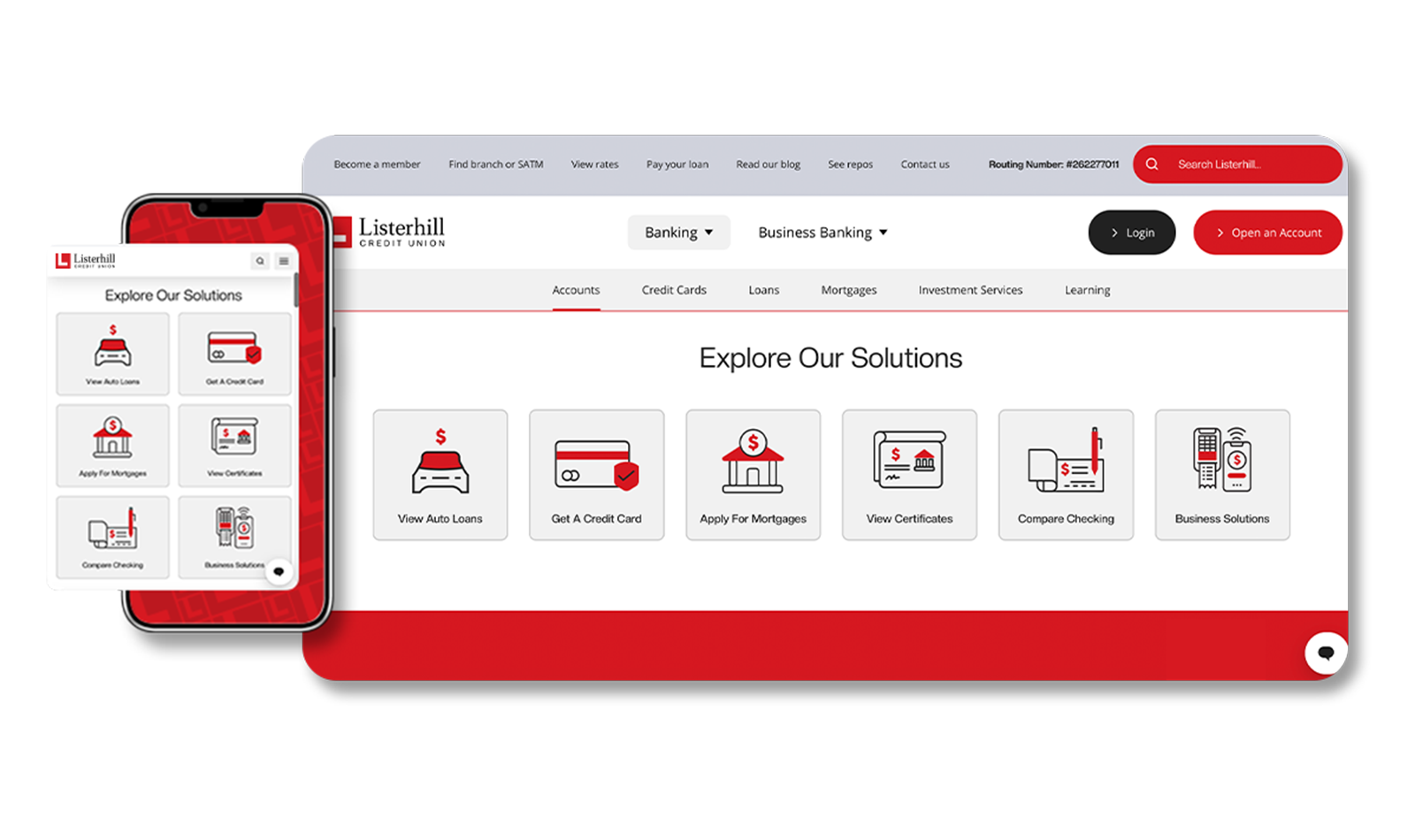
Quick-access buttons now sit right below the homepage banner, putting our most popular tools and pages within easy reach — especially on mobile. We’ve also simplified our menus so you can navigate in fewer clicks.
Built for Life on the Go
We’ve optimized every corner of our site for mobile, so banking with us feels smooth and simple wherever you are. Take a look around and see what’s new!
Guide to Holiday Budgeting for Thanksgiving & Christmas
Listerhill Editorial Team
25 Nov 2025•8
min read
Editorial Note: Articles published are intended to provide general information and educational content related to personal finance, banking, and credit union services. While we strive to ensure the accuracy and reliability of the information presented, it should not be considered as financial advice and may be revised as needed.
Planning for the holidays can be exciting—but it can also create financial stress, especially with rising prices and recent changes to SNAP funding. As Thanksgiving and Christmas approach, many households are feeling the pressure to stretch their dollars further while still creating meaningful traditions.
The good news: with a thoughtful plan, the holidays can remain joyful and memorable without putting unnecessary strain on your budget. In this guide, we walk through practical ways to manage holiday spending, reduce expenses, and stay focused on what matters most.
A solid budget is the foundation of a stress-free holiday season, and budgeting for the holidays doesn’t have to be hard. Start by setting a total spending limit that covers everything—gifts, food, travel, décor, activities, and those little seasonal extras that add up fast
Then take a moment to think about what truly matters most to you and your family. Maybe it’s preparing a favorite holiday meal. Maybe it’s exchanging gifts, traveling to see loved ones, or spending time together at community events. When you know your priorities, it’s easier to direct more of your budget toward the parts of the season that feel the most meaningful.
My Goals Savings. Setting aside the money you plan to spend—and keeping it in one place—helps you stay organized and gives you a clear view of what’s available as you shop, plan, and celebrate.
Thanksgiving and Christmas Budget Planner Template
Use the template below to plan and track your expenses:
Category
Planned Amount
Actual Amount
Notes
Thanksgiving groceries
Christmas groceries
Gifts
Travel
Holiday décor
Activities & events
Other seasonal expenses
Total
Ways to Prepare Holiday Meals on a Budget
Feeding friends and family during Thanksgiving and Christmas doesn’t have to stretch your grocery budget. A few strategic choices can help you save without sacrificing flavor or tradition.
Consider:
Choosing dishes with overlapping ingredients, for example, potatoes, carrots, onions, and herbs used across multiple recipes
Buying store brands for basics like flour, sugar, butter, and spices.
Using digital coupons and rewards apps from your grocery store.
Planning around seasonal produce, which tends to cost less.
Hosting a potluck‑style meal. This means inviting your guests to contribute a dish—appetizer, side, dessert, or drink—so the meal becomes a collaborative, fun event rather than one person bearing all the cost. Sharing responsibilities can significantly reduce your out‑of‑pocket food expenses and make the holiday gathering more community-centered.
For households relying on SNAP, rising prices and changes to benefits can make holiday meals feel even tighter. Simple strategies like the ones mentioned above—shopping weekly sales, swapping pricey ingredients for affordable staples, and keeping versatile foods like beans, rice, pasta, and potatoes on hand—can help stretch your dollars and keep your holiday table full.
Thanksgiving Meals on a Budget
Preparing a Thanksgiving meal can quickly become expensive, especially when feeding a crowd. But with a little planning and smart ingredient choices, you can create a delicious, satisfying meal without stretching your budget.
Side dishes often make up the bulk of a Thanksgiving spread—and the good news is that many can be made with inexpensive, versatile ingredients you may already have on hand. By focusing on recipes that share common ingredients, using store brands, and planning around seasonal produce, you can keep costs down while still serving a festive, flavorful meal that your family and friends will love.
Below are some budget-friendly side dish ideas, complete with the ingredients you’ll need to plan and shop efficiently.
Budget-Friendly Thanksgiving Side Dish Ideas
Roasted Seasonal Vegetables: carrots, parsnips or sweet potatoes, Brussels sprouts or broccoli, olive oil or vegetable oil, salt and pepper, optional: garlic, rosemary, thyme
Mashed or Roasted Potatoes: russet or Yukon Gold potatoes, butter or margarine, milk or cream, salt and pepper, optional: garlic or chives
Green Bean Casserole: fresh or frozen green beans, cream of mushroom soup (store brand works), milk, French-fried onions (for topping), salt and pepper
Stuffing Made with Day-Old Bread: day-old bread (white, wheat, or a mix), onion, celery, chicken or vegetable broth, butter or margarine, dried or fresh herbs (sage, thyme, parsley), salt and pepper
Simple Garden Salad: mixed greens (lettuce, spinach, or salad mix), tomatoes or cherry tomatoes, cucumber, carrots, salad dressing (store-bought or homemade vinaigrette)
Cornbread or Rolls: cornmeal (for cornbread) or pre-made rolls, flour, baking powder, eggs, milk, butter or oil, sugar (optional), salt
Christmas Meals on a Budget
The holidays are about gathering with loved ones, sharing laughter, and creating memories—but they can also come with a high price tag. Preparing a Christmas meal doesn’t have to mean overspending or sacrificing the dishes that make the season feel special.
Think of your Christmas table as a chance to bring people together, not just to showcase an elaborate spread. By following the tips we shared above, you can serve a meal that’s festive, satisfying, and full of the flavors everyone loves—without stretching your wallet.
Below are some budget-friendly Christmas meal ideas, with ingredient lists to make planning and shopping a little easier.
Budget-Friendly Christmas Meal Ideas
Baked Chicken or Turkey Breast: chicken or turkey breast, olive oil or butter, garlic, herbs (rosemary, thyme, sage), salt and pepper
Pasta Bake or Lasagna with Seasonal Vegetables: pasta or lasagna noodles, seasonal vegetables (zucchini, spinach, mushrooms), ricotta or cottage cheese, shredded mozzarella, tomato sauce, olive oil, garlic, salt and pepper
Slow-Cooker Stew or Roast: inexpensive cuts of beef, chicken, or pork, carrots, potatoes, onions, celery, broth (chicken, beef, or vegetable), garlic, herbs (thyme, bay leaves), salt and pepper
DIY Holiday Cookie Boxes: flour, sugar, butter or margarine, eggs, baking powder, vanilla extract, cocoa or chocolate chips, sprinkles or optional decorations
Charcuterie-Style Boards: store-brand cheese, deli meats, crackers, fresh or dried fruit, nuts, olives, pickles
These options offer flavor and tradition without the higher prices of holiday-specific meats.
Gift-Giving Strategies that Help You Save
Gift-giving is one of the biggest reasons holiday budgets can go off track. But with a little planning and creativity, you can give meaningful presents without stretching your finances. Setting per-person spending limits, organizing a family gift exchange, or focusing on thoughtful, low-cost gifts can make the season joyful—and affordable—for everyone.
Buying Christmas Gifts on a Budget
Shop Early During Sales
Planning your purchases in advance lets you take advantage of seasonal deals instead of paying full price at the last minute. For example:
Black Friday and Cyber Monday: Great opportunities for big-ticket items or electronics.
Early holiday sales: Many retailers offer promotions weeks before the holidays.
Shop Clearance and Discount Retailers
You don’t have to pay full price to find quality gifts:
Discount retailers: Stores like Marshalls, TJ Maxx, Ross, or Burlington often carry quality items at reduced prices.
Refurbished electronics: Buying from reputable sellers can save hundreds on gadgets and devices.
Clearance items: Look for seasonal markdowns or end-of-line products.
DIY Christmas Gift Ideas
Homemade gifts are personal, meaningful, and usually low-cost. Some ideas:
Baked goods: Cookies, fudge, or a homemade jam jar.
DIY crafts or ornaments: Simple, personalized touches that show you care.
Memory or gratitude journals: Fill a notebook with prompts, photos, or notes for someone special.
Experience-Based or Personalized Gifts
Sometimes, the best presents aren’t physical items. Consider giving:
Movie-night or game-night bundles: snacks, a streaming service gift card or board game, and cozy blankets.
“Acts of service” coupons: Offer to cook a meal, babysit, help with chores, or run errands.
Framed family photos or personalized recipe books: Gifts that celebrate memories and traditions.
By combining these strategies, you can give meaningful presents without overspending. Thoughtful holiday gifts don’t have to come with a high price tag, and your family and friends will appreciate the care you put into them.
Best Ways to Keep Track of Your Spending
Keeping an eye on your holiday spending can prevent unwelcome surprises when the bills arrive. Here are some strategies to stay on top of your budget:
Use your credit union’s mobile tools: If you’re a Listerhill member, you can easily monitor spending by logging in to Online Banking or using our Mobile App. Quick access to your account helps you see exactly where your money is going.
Track receipts: Keep paper receipts in an envelope or snap photos with your phone. Having a record of each purchase makes it easier to review your spending and adjust if needed.
Set weekly “budget check-ins”: Take a few minutes each week during November and December to review your holiday spending. This habit helps you catch overspending early and make adjustments before it becomes a problem.
Be cautious with buy-now-pay-later plans: Apps like Klarna or Afterpay can be tempting since they let you split payments into four installments with little or no interest. But these services can make it easy to overspend and may lead to higher-than-expected bills in January.
By using these tools and habits, you can enjoy the holidays with confidence—knowing your spending is under control and you’ll start the new year off on the right foot.
What To Do If You Overspend
Overspending during the holidays is common, and it doesn’t have to derail your financial progress. Here’s how to reset:
Revisit your January budget: Rebalance your spending categories for the new year. For example, you might pause non-essential expenses for the first couple of weeks, like dining out or subscriptions you barely use.
Focus on high-interest balances: If you overused credit cards, prioritize paying down balances with the highest interest rates first, since they grow the fastest.
A few small adjustments like these can help you regain control of your finances quickly and start the year off strong.
Consider a Balance Transfer to Start the New Year Strong
If the holidays leave you with higher credit card balances than you planned, a balance transfer can help you start the new year on the right foot. By moving balances from multiple high-interest cards to a single card with a lower rate—or a low introductory APR—you may be able to save on interest, simplify payments, and pay down debt faster.
At Listerhill Credit Union, you may even be able to transfer balances without paying a fee, making it an even smarter way to manage your holiday spending.
Benefits of a Balance Transfer
Reduce the interest you pay: More of your payment goes toward the principal instead of interest.
Consolidate multiple balances: One payment is easier to manage than several.
Lower your monthly payment: Free up money in your budget for other expenses.
Pay down debt faster: A lower interest rate means faster progress toward being debt-free.
Before you apply, review the promotional terms and any applicable fees. If you choose to transfer a balance to a Listerhill Credit Union Credit Card, our in-branch Member Advocates and Contact Center team are always available to answer your questions and help you find the credit card option that works best for you.
A More Joyful, Less Stressful Holiday Season
The holidays don’t have to be defined by how much you spend—they can be shaped by connection, creativity, and thoughtful planning. With a little preparation, you can enjoy Thanksgiving and Christmas with confidence, knowing your budget is under control and your celebrations are meaningful.
At Listerhill Credit Union, we’re here to help make your holidays and the year ahead easier. From budgeting tools to helpful financial resources, becoming a member gives you access to services designed to support your goals and simplify your finances.
Ready to take control of your holiday spending and start the new year strong?
ClickSWITCH is an automated account switching solution that makes it easy for you to quickly and securely switch your recurring direct deposits and automatic payments from your previous financial institution account(s) to your new Listerhill Credit Union account(s).
Do I have to be a Listerhill member to apply?
You can apply as a current member or become a member during the application process if you meet eligibility and credit requirements.†
What does 0% APR for 12 months mean?
It means you won't be charged interest on qualifying purchases for the first 12 months after opening your new Listerhill Visa Signature® Rewards, Keystone Signature® Rewards, Visa Platinum®, or Keystone Platinum® credit card.†
How long does the 0% APR last?
This introductory 0% APR offer applies for 12 months from account opening.†
Do current Listerhill credit cardholders qualify?
No; current Listerhill Visa Signature® Rewards, Keystone Signature® Rewards, Visa Platinum®, and Keystone Platinum® credit cardholders are not eligible for this offer, but other promotions may be available.
This website uses cookies
Our site uses strictly necessary cookies to ensure it works properly. Other optional cookies help us personalize your website experience, improve functionality and content, and identify what might most appeal to you. You can accept or deny optional cookies below. To learn more about how we use cookies and how to manage your browser settings, please see our
Privacy Policy.
Our site uses strictly necessary cookies to ensure it works properly. Other optional cookies help us personalize your website experience, improve functionality and content, and identify what might most appeal to you. You can accept or deny optional cookies below. To learn more about how we use cookies and how to manage your browser settings, please see our
Privacy Policy.
Strictly Necessary
These cookies are essential for you to browse the website and use its features, such as accessing secure areas of the site. Without these cookies, services you have asked for cannot be provided.
Show Cookies
Name: cookie-consent
Provider: Listerhill Credit Union
Expiry: 1 year
Description: Stores your cookie consent preferences.
Name: CraftSessionId
Provider: Listerhill Credit Union
Expiry: Session
Description: Craft CMS session cookie for site functionality.
Name: CRAFT_CSRF_TOKEN
Provider: Listerhill Credit Union
Expiry: Session
Description: Security token to prevent cross-site request forgery.
Name: secure.fx.sid.fxweb
Provider: Apiture (online banking)
Expiry: Session
Description: Session cookie that keeps the online banking login widget signed in while you use it.
Name: XSRF-TOKEN
Provider: Apiture (online banking)
Expiry: 1 day
Description: Protects the online banking login form against cross-site request forgery.
Name: d_id
Provider: Apiture (online banking)
Expiry: 1 year
Description: Device identifier used by online banking to recognize trusted devices at login.
Name: TS*
Provider: Apiture (online banking)
Expiry: Session
Description: Security cookies set by the online banking network protection to detect request tampering.
Name: __cf_bm
Provider: Cloudflare (HubSpot services)
Expiry: 30 minutes
Description: Set by Cloudflare to distinguish real visitors from malicious bots on embedded third-party services. Contains no visitor profile.
Name: site-tour-seen
Provider: Listerhill Credit Union
Expiry: 1 year
Description: Remembers that you have already seen the site tour popup so it is not shown again.
Performance
These cookies collect information about how you use our website, such as which pages you visit most often. This data helps us improve how our website works and understand user behavior. All information is aggregated and anonymous.
Show Cookies
Name: _ga
Provider: Google Analytics
Expiry: 2 years (browsers may cap at 400 days)
Description: Registers a unique ID used to generate statistical data on how the visitor uses the website.
Name: _ga_*
Provider: Google Analytics
Expiry: 2 years (browsers may cap at 400 days)
Description: Used by Google Analytics to collect data on the number of times a user has visited the website.
Name: _gid
Provider: Google Analytics
Expiry: 24 hours
Description: Registers a unique ID used to generate statistical data on how the visitor uses the website.
Name: _gat
Provider: Google Tag Manager
Expiry: 1 minute
Description: Used by Google Tag Manager to throttle request rate.
Name: __hstc
Provider: HubSpot
Expiry: 6 months
Description: Main cookie for tracking visitors.
Name: __hssc
Provider: HubSpot
Expiry: 30 minutes
Description: Keeps track of sessions.
Name: __hssrc
Provider: HubSpot
Expiry: Session
Description: Determines if visitor restarted their browser.
Name: hubspotutk
Provider: HubSpot
Expiry: 6 months
Description: Tracks visitor identity for form submissions.
Name: _ALGOLIA
Provider: Algolia
Expiry: 6 months
Description: Anonymous visitor token used by our site search (Algolia) to measure search usage and personalize results.
Name: _hjSessionUser_*
Provider: Hotjar
Expiry: 1 year
Description: Identifies a returning visitor to Hotjar so site usage can be measured across visits.
Name: _hjSession_*
Provider: Hotjar
Expiry: 30 minutes
Description: Holds the current Hotjar session so interactions on a visit can be grouped together.
Name: _hjCookieTest
Provider: Hotjar
Expiry: Session
Description: Temporary cookie used to check whether the browser accepts cookies. Contains no personal data.
Marketing
These cookies are used to deliver content and advertisements more relevant to you and your interests. They may also be used to limit the number of times you see an advertisement and measure the effectiveness of advertising campaigns.
Show Cookies
Name: om-*
Provider: OptinMonster
Expiry: 1 year
Description: Used by OptinMonster to track campaign interactions and display relevant offers.
Name: _omappvs
Provider: OptinMonster
Expiry: Session
Description: Used by OptinMonster to determine new vs. returning visitors.
Name: _omappvp
Provider: OptinMonster
Expiry: 11 years (browsers may cap at 400 days)
Description: Used by OptinMonster to track campaign views and conversions.
Name: _fbp
Provider: Facebook/Meta
Expiry: 3 months
Description: Identifies visitors for personalized advertising.
Name: lastExternalReferrer
Provider: Facebook/Meta
Expiry: Session
Description: Records how the user reached the website.
Name: lastExternalReferrerTime
Provider: Facebook/Meta
Expiry: Session
Description: Records when the user reached the website.
Name: __spdt
Provider: Spotify Ad Analytics
Expiry: 1 year
Description: Used by Spotify Ad Analytics to measure the effectiveness of audio advertising campaigns.
Name: __arank_duid
Provider: Alpharank
Expiry: 13 months
Description: Device identifier used by Alpharank to measure marketing campaign performance.
Name: cookietest
Provider: Alpharank
Expiry: Session
Description: Temporary cookie used to check whether the browser accepts cookies. Contains no personal data.
Name: sa-user-id
Provider: StackAdapt (El Toro advertising)
Expiry: 1 year
Description: Identifies your browser to our advertising vendor so ad performance can be measured.
Name: sa-user-id-v2
Provider: StackAdapt (El Toro advertising)
Expiry: 1 year
Description: Identifies your browser to our advertising vendor so ad performance can be measured.
Name: sa-user-id-v3
Provider: StackAdapt (El Toro advertising)
Expiry: 1 year
Description: Identifies your browser to our advertising vendor so ad performance can be measured.
Name: sa-user-id-v4
Provider: StackAdapt (El Toro advertising)
Expiry: 1 year
Description: Identifies your browser to our advertising vendor so ad performance can be measured.
Name: sa-u-*
Provider: StackAdapt (El Toro advertising)
Expiry: 30 days
Description: Records the traffic source that brought you to the site for ad attribution.
Name: sa-r-*
Provider: StackAdapt (El Toro advertising)
Expiry: 30 days
Description: Records the referring site for ad attribution.
Name: samp-*
Provider: StackAdapt (El Toro advertising)
Expiry: 90 days
Description: Records the ad campaign that brought you to the site so conversions can be attributed to it.
Name: TDID
Provider: The Trade Desk (Brandzooka advertising)
Expiry: 1 year
Description: Identifies your browser to our advertising vendor so ad performance can be measured.
Name: TDCPM
Provider: The Trade Desk (Brandzooka advertising)
Expiry: 1 year
Description: Stores advertising campaign data used to measure ad performance.
Name: TTDOptOut
Provider: The Trade Desk (Brandzooka advertising)
Expiry: 1 year
Description: Records that you have opted out of interest-based advertising from this vendor.
Name: member
Provider: Listerhill Credit Union
Expiry: 360 days
Description: Marks your browser as a member so marketing and site content can be tailored to members.
Name: fr
Provider: Facebook/Meta
Expiry: 3 months
Description: Third-party Meta cookie used to deliver and measure personalized advertising.
Functionality
These cookies allow our website to remember choices you make and provide enhanced, more personal features. They may be used to provide services you have requested such as live chat support and interactive maps.
Show Cookies
Name: NID
Provider: Google Maps
Expiry: 6 months
Description: Used by Google Maps to store user preferences and information.
Name: visitor_session
Provider: Glia
Expiry: 1 year
Description: Used by Glia live chat to recognize your browser across visits so chat sessions and history can be maintained.
Name: visitor_session_partitioned
Provider: Glia
Expiry: 1 year
Description: Partitioned copy of the Glia visitor session cookie for browsers with third-party cookie protections.
Name: incompat_visitor_session
Provider: Glia
Expiry: 1 year
Description: Fallback copy of the Glia visitor session cookie for browsers without partitioned cookie support.