Please login to Online Banking to apply. If you do not have Online Banking, please click here to apply.
Not a member yet?
Listerhill Credit Union is a nonprofit financial cooperative improving lives in our community.
If you live in Alabama, Georgia, Mississippi, Florida, or Tennessee, you are eligible to become a member. Depending on your individual eligibility, we may require membership into an approved association at no cost to you.
You can also qualify for membership by being a family member of a current or potential Listerhill member.
With only $5, you can join Listerhill today and start taking advantage of a lifetime membership.
By clicking "Continue," you will leave Listerhill's website and enter a website hosted by a third party. Please be aware that this external website is not operated by Listerhill Credit Union. We are not responsible for the content, availability or the security of this linked site, and our privacy policies do not apply. We encourage you to review the privacy and security policies of the site you are visiting.
Welcome to Your New Site!
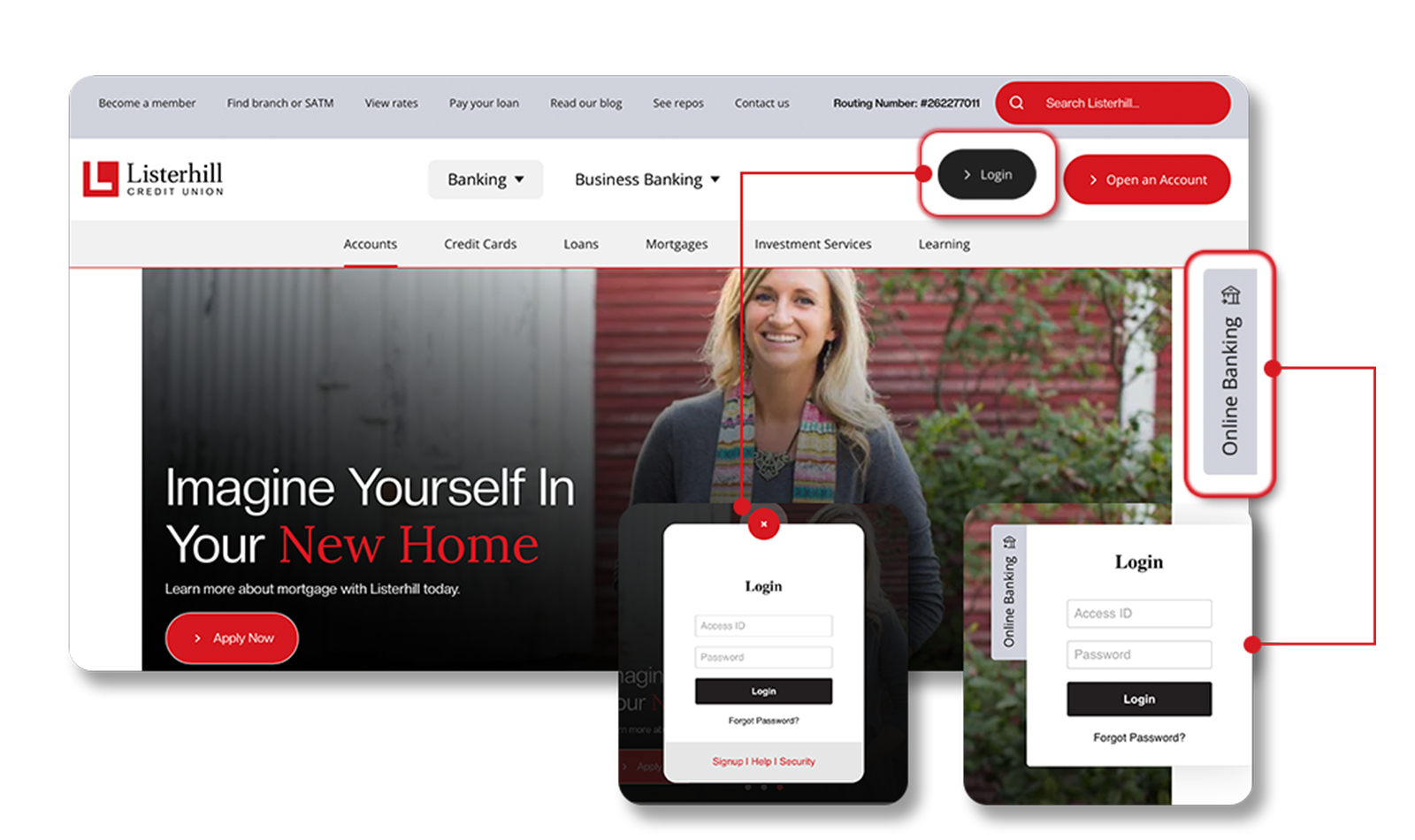
We’ve refreshed our online banking login to make it easier to find — look for it in the sidebar of our new homepage. Don’t worry, your original login option is still there too!
Find Anything, Fast
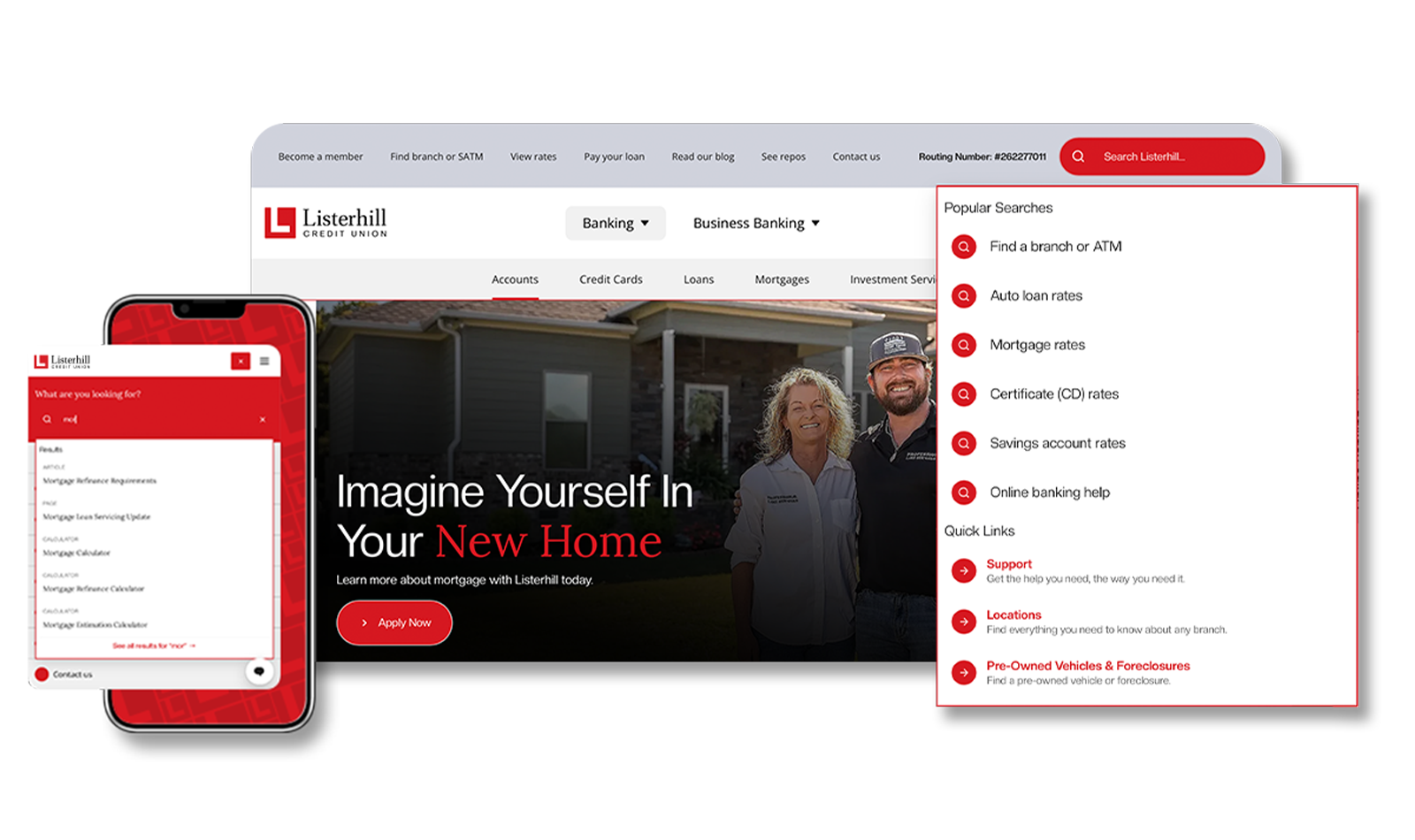
Our new search bar lives right at the top of every page, complete with autocomplete, popular searches, and helpful filters. Finding what you need has never been quicker.
Get There in One Click
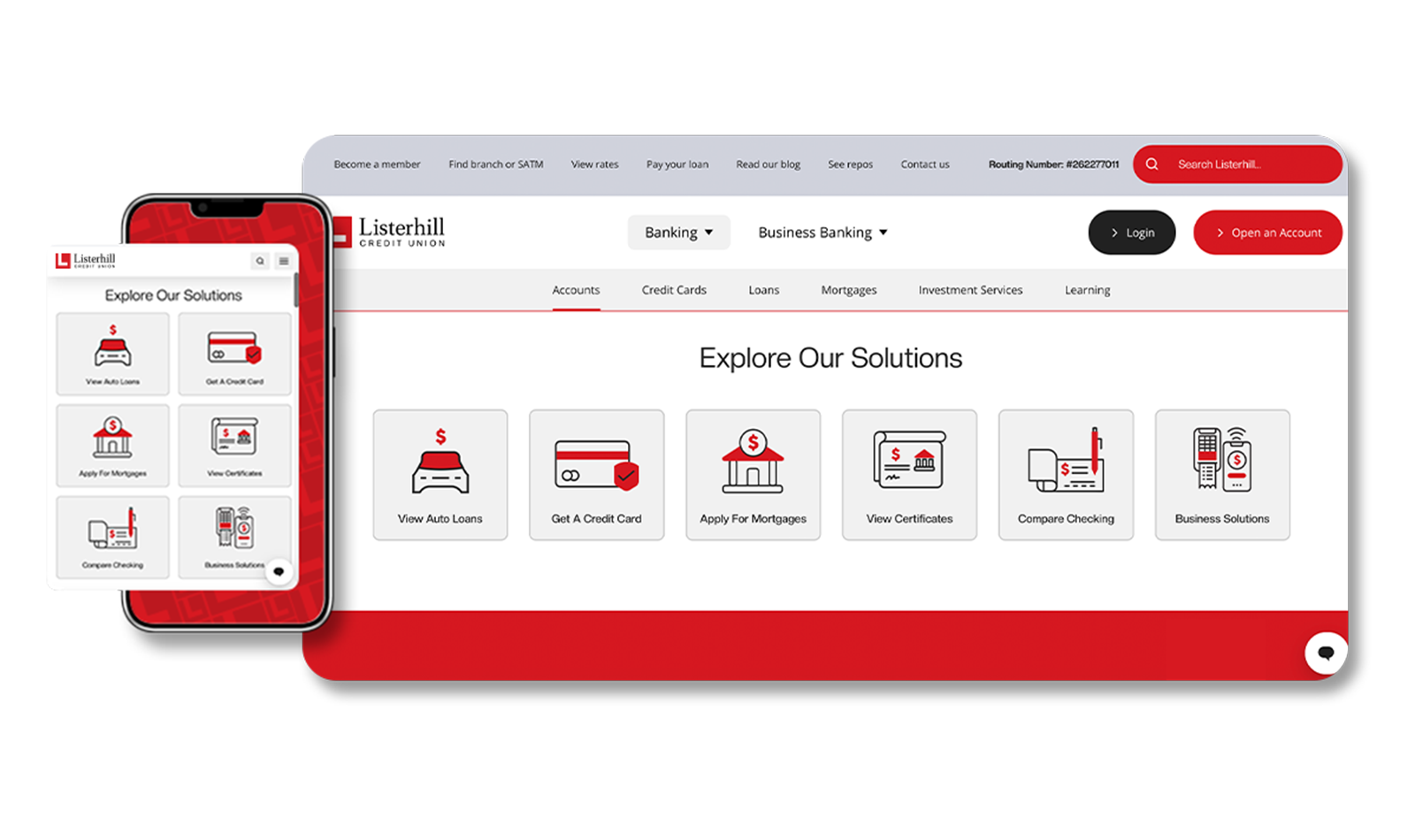
Quick-access buttons now sit right below the homepage banner, putting our most popular tools and pages within easy reach — especially on mobile. We’ve also simplified our menus so you can navigate in fewer clicks.
Built for Life on the Go
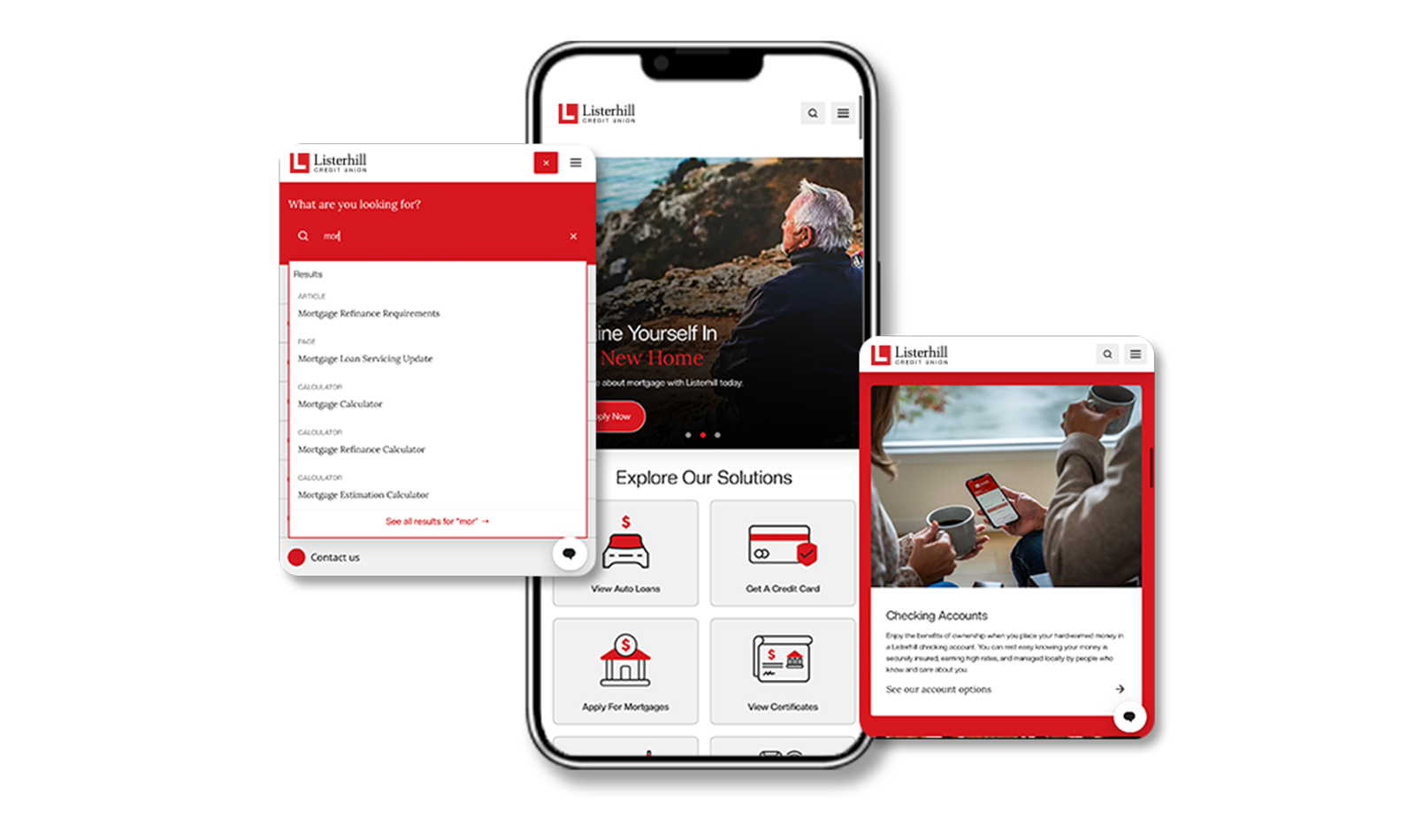
We’ve optimized every corner of our site for mobile, so banking with us feels smooth and simple wherever you are. Take a look around and see what’s new!
How to Protect Yourself from Fraud: Stay Ahead of Scammers
Listerhill Editorial Team
23 Oct 2023•4
min read
Editorial Note: Articles published are intended to provide general information and educational content related to personal finance, banking, and credit union services. While we strive to ensure the accuracy and reliability of the information presented, it should not be considered as financial advice and may be revised as needed.
Fraud and Identity Theft Are on the Rise
Fraud isn't just a growing concern - it's a national crisis. According to the Federal Trade Commission (FTC), Americans lost $12.5 billion to fraud in 2024, a 25% increase from 2023. Investment scams led the charge, costing victims $5.7 billion, followed closely by imposter scams at $2.95 billion.
Fraud isn't just a growing concern - it's a national crisis. According to the Federal Trade Commission (FTC), Americans lost $12.5 billion to fraud in 2024, a 25% increase from 2023. Investment scams led the charge, costing victims $5.7 billion, followed closely by imposter scams at $2.95 billion.
Fraudsters are targeting individuals of all ages, especially seniors and younger adults. Their methods have become increasingly deceptive, and the financial consequences can be devastating. That's why Listerhill Credit Union is committed to helping you recognize fraud early and protect your financial wellbeing.
How Does Fraud Happen?
Scammers use phone calls, emails, texts, and even social media to trick you into revealing personal information - like your Social Security number, banking credentials, or debit card details. Once they have access, they can:
Drain your checking or savings account
Open fraudulent credit accounts
File false tax returns
Use your identity to apply for loans
With scams becoming more aggressive and creative, it's more important than ever to stay informed.
How to Protect Your Information
Follow these practical steps to help prevent identity theft and keep your information secure:
Use Strong, Unique Passwords
Don't reuse the same password across different accounts. Create long, complex passwords using a mix of upper/lowercase letters, numbers, and special characters. A password manager can help you keep them secure.
Turn On Account Alerts
Listerhill's online banking allows you to receive real-time alerts for activity on your accounts, helping you spot unauthorized transactions immediately.
Be Wary of Unsolicited Messages
Scammers often pose as trusted institutions or family members. If you get a suspicious text, email, or phone call asking for personal info, stop and verify. Listerhill will never ask for your Social Security number or password in a message you didn't expect.
Shred Sensitive Documents
Use a cross-cut shredder to destroy bank statements, medical records, and credit card offers. Dumpster diving is still a common tactic used to steal identities.
Check Your Credit Report
Visit a AnnualCreditReport.com to access your credit reports for free. Watch for unfamiliar accounts or changes and consider freezing your credit if you're not applying for new lines anytime soon.
Most Common Scams in 2025 (And How to Avoid Them)
Scammers are constantly updating their tricks. Here are the most reported types of fraud in 2025:
Smishing (Text Message Scams)
Scammers send fake texts pretending to be from your bank, delivery services, or toll agencies. Never click links in unexpected messages - go directly to the official website instead.
Deepfake & AI Voice Scams
Fraudsters use AI to mimic voices of loved ones or company reps over the phone or in video. Always verify urgent requests by calling a known number or asking personal questions.
Romance & Investment Scams
Criminals build fake relationships online, then convince victims to send money or invest in bogus crypto platforms. Don't send money to someone you haven't met in person and verified.
Fake Job & Verification Scams
These scams involve fake job offers or requests to "verify your identity" via email or text. Only apply through official company websites and avoid sharing personal info early in the hiring process.
Vishing (Phone Call Scams)
Scammers spoof caller IDs to impersonate banks or government agencies. Hang up and call the organization back using their official number before sharing any sensitive info.
According to the FTC's 2024 Data Book, older adults were disproportionately affected in 2024, with more than $2.3 billion in losses reported and median losses of $1,000 among those ages 70-79.
We're here to help. Our team can walk you through any suspicious activity and verify messages you've received. Call us or visit your local branch - and always trust your instincts. When in doubt, don't respond - reach out.
Contact us at 256-383-9204 or by visiting our Support page.
Report the scam to the BBB Scam Tracker and the government via the FTC Report Fraud site. You may also want to report scammers directly to the FBI.
Additional steps you can take:
Change your passwords for email, banking, and online shopping platforms immediately.
Monitor your credit report and accounts to ensure no new fraudulent activity occurs. You may also want to freeze your credit.
What Listerhill Is Doing to Protect You
Advanced Fraud Monitoring: we flag suspicious transactions in real time.
Regular Staff Training: our employees stay up to date on the latest fraud trends.
Secure Website & Encryption: our online services use encryption to keep your data safe.
Community Education: we offer fraud prevention content through our Scam & Fraud Center.
Let's Stay Vigilant - Together
You don't have to navigate fraud prevention alone. Listerhill Credit Union is here to help you stay informed and protected. If you ever have questions or concerns, visit our Scam & Fraud Center to learn more or reach out through our Support page.
Fraud may be on the rise, but together, we can fight back.
ClickSWITCH is an automated account switching solution that makes it easy for you to quickly and securely switch your recurring direct deposits and automatic payments from your previous financial institution account(s) to your new Listerhill Credit Union account(s).
Do I have to be a Listerhill member to apply?
You can apply as a current member or become a member during the application process if you meet eligibility and credit requirements.†
What does 0% APR for 12 months mean?
It means you won't be charged interest on qualifying purchases for the first 12 months after opening your new Listerhill Visa Signature® Rewards, Keystone Signature® Rewards, Visa Platinum®, or Keystone Platinum® credit card.†
How long does the 0% APR last?
This introductory 0% APR offer applies for 12 months from account opening.†
Do current Listerhill credit cardholders qualify?
No; current Listerhill Visa Signature® Rewards, Keystone Signature® Rewards, Visa Platinum®, and Keystone Platinum® credit cardholders are not eligible for this offer, but other promotions may be available.
This website uses cookies
Our site uses strictly necessary cookies to ensure it works properly. Other optional cookies help us personalize your website experience, improve functionality and content, and identify what might most appeal to you. You can accept or deny optional cookies below. To learn more about how we use cookies and how to manage your browser settings, please see our
Privacy Policy.
Our site uses strictly necessary cookies to ensure it works properly. Other optional cookies help us personalize your website experience, improve functionality and content, and identify what might most appeal to you. You can accept or deny optional cookies below. To learn more about how we use cookies and how to manage your browser settings, please see our
Privacy Policy.
Strictly Necessary
These cookies are essential for you to browse the website and use its features, such as accessing secure areas of the site. Without these cookies, services you have asked for cannot be provided.
Show Cookies
Name: cookie-consent
Provider: Listerhill Credit Union
Expiry: 1 year
Description: Stores your cookie consent preferences.
Name: CraftSessionId
Provider: Listerhill Credit Union
Expiry: Session
Description: Craft CMS session cookie for site functionality.
Name: CRAFT_CSRF_TOKEN
Provider: Listerhill Credit Union
Expiry: Session
Description: Security token to prevent cross-site request forgery.
Name: secure.fx.sid.fxweb
Provider: Apiture (online banking)
Expiry: Session
Description: Session cookie that keeps the online banking login widget signed in while you use it.
Name: XSRF-TOKEN
Provider: Apiture (online banking)
Expiry: 1 day
Description: Protects the online banking login form against cross-site request forgery.
Name: d_id
Provider: Apiture (online banking)
Expiry: 1 year
Description: Device identifier used by online banking to recognize trusted devices at login.
Name: TS*
Provider: Apiture (online banking)
Expiry: Session
Description: Security cookies set by the online banking network protection to detect request tampering.
Name: __cf_bm
Provider: Cloudflare (HubSpot services)
Expiry: 30 minutes
Description: Set by Cloudflare to distinguish real visitors from malicious bots on embedded third-party services. Contains no visitor profile.
Name: site-tour-seen
Provider: Listerhill Credit Union
Expiry: 1 year
Description: Remembers that you have already seen the site tour popup so it is not shown again.
Performance
These cookies collect information about how you use our website, such as which pages you visit most often. This data helps us improve how our website works and understand user behavior. All information is aggregated and anonymous.
Show Cookies
Name: _ga
Provider: Google Analytics
Expiry: 2 years (browsers may cap at 400 days)
Description: Registers a unique ID used to generate statistical data on how the visitor uses the website.
Name: _ga_*
Provider: Google Analytics
Expiry: 2 years (browsers may cap at 400 days)
Description: Used by Google Analytics to collect data on the number of times a user has visited the website.
Name: _gid
Provider: Google Analytics
Expiry: 24 hours
Description: Registers a unique ID used to generate statistical data on how the visitor uses the website.
Name: _gat
Provider: Google Tag Manager
Expiry: 1 minute
Description: Used by Google Tag Manager to throttle request rate.
Name: __hstc
Provider: HubSpot
Expiry: 6 months
Description: Main cookie for tracking visitors.
Name: __hssc
Provider: HubSpot
Expiry: 30 minutes
Description: Keeps track of sessions.
Name: __hssrc
Provider: HubSpot
Expiry: Session
Description: Determines if visitor restarted their browser.
Name: hubspotutk
Provider: HubSpot
Expiry: 6 months
Description: Tracks visitor identity for form submissions.
Name: _ALGOLIA
Provider: Algolia
Expiry: 6 months
Description: Anonymous visitor token used by our site search (Algolia) to measure search usage and personalize results.
Name: _hjSessionUser_*
Provider: Hotjar
Expiry: 1 year
Description: Identifies a returning visitor to Hotjar so site usage can be measured across visits.
Name: _hjSession_*
Provider: Hotjar
Expiry: 30 minutes
Description: Holds the current Hotjar session so interactions on a visit can be grouped together.
Name: _hjCookieTest
Provider: Hotjar
Expiry: Session
Description: Temporary cookie used to check whether the browser accepts cookies. Contains no personal data.
Marketing
These cookies are used to deliver content and advertisements more relevant to you and your interests. They may also be used to limit the number of times you see an advertisement and measure the effectiveness of advertising campaigns.
Show Cookies
Name: om-*
Provider: OptinMonster
Expiry: 1 year
Description: Used by OptinMonster to track campaign interactions and display relevant offers.
Name: _omappvs
Provider: OptinMonster
Expiry: Session
Description: Used by OptinMonster to determine new vs. returning visitors.
Name: _omappvp
Provider: OptinMonster
Expiry: 11 years (browsers may cap at 400 days)
Description: Used by OptinMonster to track campaign views and conversions.
Name: _fbp
Provider: Facebook/Meta
Expiry: 3 months
Description: Identifies visitors for personalized advertising.
Name: lastExternalReferrer
Provider: Facebook/Meta
Expiry: Session
Description: Records how the user reached the website.
Name: lastExternalReferrerTime
Provider: Facebook/Meta
Expiry: Session
Description: Records when the user reached the website.
Name: __spdt
Provider: Spotify Ad Analytics
Expiry: 1 year
Description: Used by Spotify Ad Analytics to measure the effectiveness of audio advertising campaigns.
Name: __arank_duid
Provider: Alpharank
Expiry: 13 months
Description: Device identifier used by Alpharank to measure marketing campaign performance.
Name: cookietest
Provider: Alpharank
Expiry: Session
Description: Temporary cookie used to check whether the browser accepts cookies. Contains no personal data.
Name: sa-user-id
Provider: StackAdapt (El Toro advertising)
Expiry: 1 year
Description: Identifies your browser to our advertising vendor so ad performance can be measured.
Name: sa-user-id-v2
Provider: StackAdapt (El Toro advertising)
Expiry: 1 year
Description: Identifies your browser to our advertising vendor so ad performance can be measured.
Name: sa-user-id-v3
Provider: StackAdapt (El Toro advertising)
Expiry: 1 year
Description: Identifies your browser to our advertising vendor so ad performance can be measured.
Name: sa-user-id-v4
Provider: StackAdapt (El Toro advertising)
Expiry: 1 year
Description: Identifies your browser to our advertising vendor so ad performance can be measured.
Name: sa-u-*
Provider: StackAdapt (El Toro advertising)
Expiry: 30 days
Description: Records the traffic source that brought you to the site for ad attribution.
Name: sa-r-*
Provider: StackAdapt (El Toro advertising)
Expiry: 30 days
Description: Records the referring site for ad attribution.
Name: samp-*
Provider: StackAdapt (El Toro advertising)
Expiry: 90 days
Description: Records the ad campaign that brought you to the site so conversions can be attributed to it.
Name: TDID
Provider: The Trade Desk (Brandzooka advertising)
Expiry: 1 year
Description: Identifies your browser to our advertising vendor so ad performance can be measured.
Name: TDCPM
Provider: The Trade Desk (Brandzooka advertising)
Expiry: 1 year
Description: Stores advertising campaign data used to measure ad performance.
Name: TTDOptOut
Provider: The Trade Desk (Brandzooka advertising)
Expiry: 1 year
Description: Records that you have opted out of interest-based advertising from this vendor.
Name: member
Provider: Listerhill Credit Union
Expiry: 360 days
Description: Marks your browser as a member so marketing and site content can be tailored to members.
Name: fr
Provider: Facebook/Meta
Expiry: 3 months
Description: Third-party Meta cookie used to deliver and measure personalized advertising.
Functionality
These cookies allow our website to remember choices you make and provide enhanced, more personal features. They may be used to provide services you have requested such as live chat support and interactive maps.
Show Cookies
Name: NID
Provider: Google Maps
Expiry: 6 months
Description: Used by Google Maps to store user preferences and information.
Name: visitor_session
Provider: Glia
Expiry: 1 year
Description: Used by Glia live chat to recognize your browser across visits so chat sessions and history can be maintained.
Name: visitor_session_partitioned
Provider: Glia
Expiry: 1 year
Description: Partitioned copy of the Glia visitor session cookie for browsers with third-party cookie protections.
Name: incompat_visitor_session
Provider: Glia
Expiry: 1 year
Description: Fallback copy of the Glia visitor session cookie for browsers without partitioned cookie support.